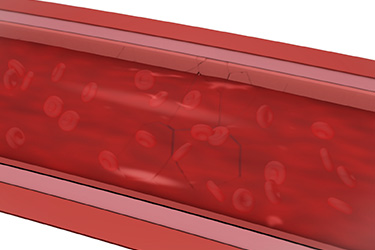
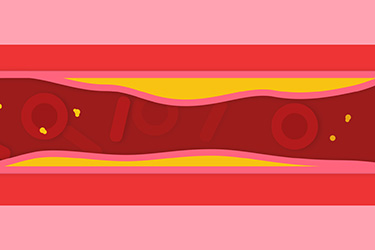
Learn what vascular disease is, the risks associated with it and the possible complications caused by atherosclerosis.
Understand what types of risk factors you cannot control and the importance in knowing them so you and your healthcare team can create the best plan for you.
Understand what types of risk factors you can control and the importance in knowing them so you and your healthcare team can make a plan to change them.
Learn the benefits quitting smoking has for the heart.
Watch this to learn how sleep and heart health are related.
Understand the importance of working with your healthcare provider to identify and control your risk factors, in order to lower the risk of serious complications of vascular disease.
Learn how various lifestyle changes can help to lessen your vascular disease risk factors and improve your overall health.
Watch this to recognize the serious complications metabolic syndrome can cause, understand the parts of metabolic syndrome and what lifestyle changes you can make to help manage it.
The higher your blood cholesterol, the greater your risk for heart attack or stroke. That's why you need to know your cholesterol level. Read on to learn how to assess your health risks.
Some risk factors for heart disease are beyond your control. But others you can control, such as smoking and high blood pressure.
Some risk factors can't be controlled, such as age or family history of heart disease. But most others can be managed by making lifestyle changes and taking medicines.
Watch this video to understand the basics about high blood pressure.
Watch this to learn what hypertension is.
Watch this to learn about blood pressure and your risks for high blood pressure.
Watch this to learn how hypertension (high blood pressure) affects your body.
Learn about the risk of high blood pressure and the importance of getting your blood pressure checked regularly.
Watch this to understand the meaning of a blood pressure reading.
Watch this video to learn what pulmonary hypertension is.
Watch this clip to learn about a blood pressure management plan and what can be included in it.
Watch this video to understand how healthy lifestyle changes can help lower blood pressure.
Watch this to know some tips and strategies for living with high blood pressure.
Watch this checklist to learn important do's and don'ts for taking your blood pressure medicine safely.
Watch this video to learn how lifestyle changes can help you manage your high blood pressure.
Watch this to learn about the DASH Eating Plan.
Understand the importance of getting support from your healthcare provider and others while learning to manage your high blood pressure.
Learn how stress and high blood pressure are related.
Learn about some simple steps to controlling hypertension.
High blood pressure (hypertension) is called the silent killer. This is because many people who have it don't know it. You can take an easy test to see if your blood pressure is too high. If it is high, you can take steps to lower it. Doing so could save your life.
You can take your own blood pressure reading using a digital monitor. Follow these step-by-step directions.
High blood pressure is known as the "silent killer" because it often has no symptoms. Healthy changes can help you lower your blood pressure.
High blood pressure (hypertension) is a long-term disease. Read on to learn how to care for yourself at home.
Your blood pressure today was higher than normal. Blood pressure that is high only once doesn't mean that you have high blood pressure. (hypertension). Read on to learn more.
Your blood pressure was high enough today to start treatment with medicines. High blood pressure (hypertension) can be controlled with lifestyle changes and medicines. High blood pressure that's not treated raises your risk for heart attack and stroke.
Your blood pressure was unusually high today. This can occur if you've missed doses of your blood pressure medicine. Or it can happen if you are taking other medicines. Learn more about how to care for yourself at home.
African Americans are at a higher risk for high blood pressure than other ethnic groups. Read on to learn why, and how making certain lifestyle changes can help lower blood pressure.
Permissive hypertension means letting a person's blood pressure stay higher than normal for a short time. It's done on purpose by doctors in the hospital.
Watch this to learn what cholesterol is, how it affects your health, and find out how to keep your heart healthy.
Your doctor says you have high cholesterol. You know that's not good. But what is cholesterol, exactly? Why is it in your blood vessels, and why is high cholesterol bad for you?
Learn how a special plan keeps your heart healthy and watch this to find out what you can do.
Watch this to learn how to choose heart-healthy foods to manage your cholesterol.
Watch this video to learn how being active helps manage your cholesterol.
Watch this to learn how statin medicines work to lower your cholesterol.
Learn to recognize important do's and don'ts for taking your cholesterol medicine safely.
Watch this to learn about cholesterol and other risk factors for heart disease and ways you can reduce your risk.
Your body needs cholesterol to build new cells and create certain hormones. But too much cholesterol is not good for you. Here's a helpful guide to understanding cholesterol, and creating a low-cholesterol diet.
High cholesterol is called hypercholesterolemia. Cholesterol and dietary fat are not the same thing. It's important to understand how the fat in your diet affects your cholesterol levels.
Transesophageal echocardiography (TEE) is a test that allows your doctor to record images of your heart from inside your esophagus, or food pipe.
A Holter monitor is a small, portable device used to monitor your heart rhythm . You wear it for about 24 to 48 hours while you go about your normal daily activities. Read on to learn more.